Understanding Yellow Wasps: Nature's Aggressive Pollinators
We offer expert wasp nest removal in Dublin, Meath, Kildare and Louth. Whether the nest is in your attic, garden, vent, or wall cavity, we’ll take care of it quickly and safely.

Wasp Nest Removal Specialists
Since 2008, we’ve been safely removing wasp nests from attics, sheds, vents, rooflines and garden areas across Ireland.
Call us on 086 233 7727 to book a professional removal today
Wasp Nests Removed
We have removed 1000s of wasp nests across Ireland since 2008!




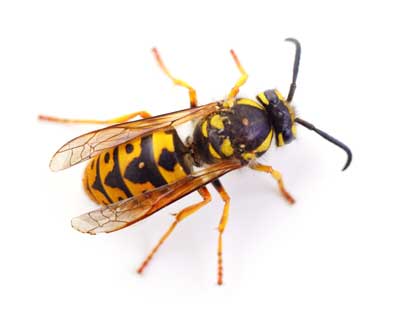
Yellow wasps are a familiar presence in Irish gardens, especially during the late summer months when their activity peaks. Known for their bold black and yellow stripes, these insects often alarm homeowners due to their painful stings and unpredictable swarming behaviour.
Although yellow wasps play an important role in the ecosystem, their nests near homes or public areas can become a serious safety risk. Understanding their behaviour and seasonal patterns is the first step in keeping your surroundings safe.
If you’ve noticed a wasp hovering near your roofline or spotted sudden insect traffic around a compost bin, it’s worth taking a closer look. These are often signs of a nearby nest. Left undisturbed, it may not pose a threat, but a single wrong move can trigger an aggressive defence response from the colony.
This article breaks down what makes yellow wasps so dangerous, how they behave through the seasons, and what to do if you discover a nest nearby.
What Makes Yellow Wasps Both Aggressive and Ecologically Important?
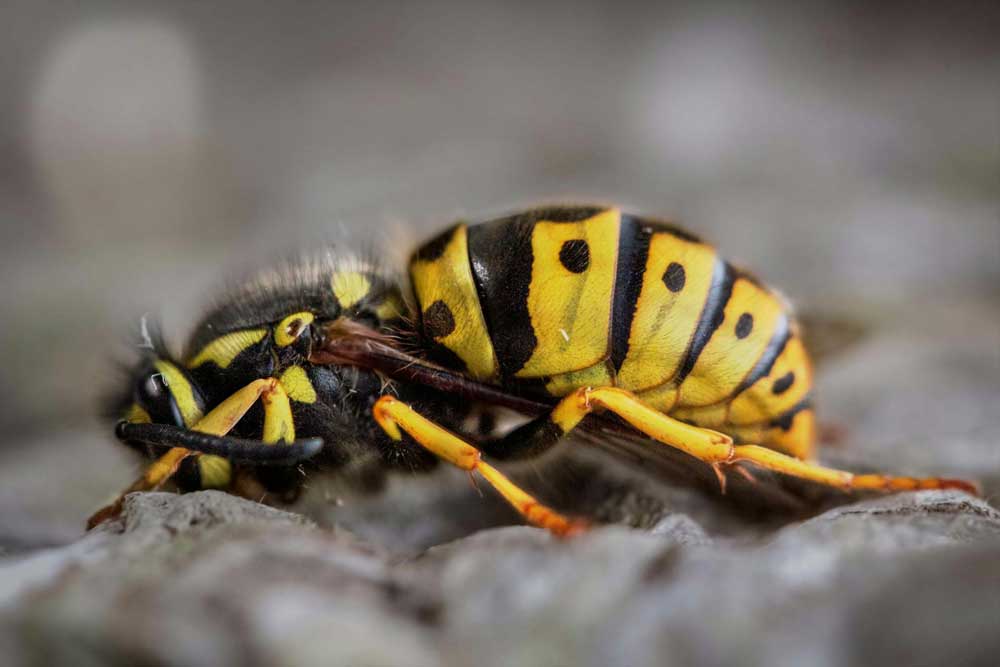
At a glance, yellow wasps can resemble bees, but they are fundamentally different. Belonging to the Vespidae family, these wasps are social insects that build nests and defend them with extreme aggression. Unlike bees, which sting once and die, a single wasp can sting multiple times, making them a greater threat when provoked.
Despite their reputation, these insects also serve important ecological functions. Many species act as natural pest controllers, feeding on flies, aphids, and other insects that damage crops and plants. Some also assist in pollination while feeding on nectar, although not as efficiently as bees.
Problems arise when their nests are built close to human activity around sheds, garden walls, loft spaces, or even under decking. Once established, the colony becomes increasingly defensive and unpredictable, especially as food becomes scarce later in the year.
Why Yellow Wasps Defends Its Nest Aggressively
One of the defining traits of yellow wasps is their territorial nature. A single disturbance near their nest can result in a full-scale swarm. Even walking too close can be perceived as a threat.
Their aggressive behaviour intensifies in late summer when worker wasps become more protective of the nest. At this stage, colonies may contain thousands of individuals. The larger the nest, the more likely it is that a slight vibration or noise will trigger a response.
These insects don’t need much provocation. Activities like mowing the lawn near a concealed nest or slamming a shed door can be enough to alert them. Once they feel threatened, they release pheromones that signal others to attack.
To avoid triggering an incident, it’s important to observe carefully and keep a safe distance from suspected nesting areas.
Where They Commonly Nest
Yellow wasps seek out sheltered, quiet spaces for building nests, areas that offer protection from weather and predators. Common hiding spots include a wasp nest in soffit panels, a wasp nest in attic cavities, or a wasp nest in roof tiles, where the colony can grow undisturbed through the summer months.
In Ireland, the most common locations include:
-
- Under the roof eaves and fascia boards.
- Inside the attic or wall cavities.
- Underground, especially in old rodent burrows.
- Within dense hedges or compost heaps.
- Inside disused sheds, garden furniture, or decking voids.
The nest itself is built from a paper-like substance made by chewing wood fibres and mixing them with saliva. Early nests are about the size of a golf ball but can grow rapidly through summer to the size of a football or larger.
The danger is that many of these nests are not visible until it’s too late. If you notice multiple wasps entering and exiting the same spot, particularly around dusk or early morning, it’s likely there’s a hidden nest.
We strongly advise against opening up spaces to inspect or remove a nest without proper protection and training.
Seasonal Behaviour and Changing Risk Levels
Like many insect species, the behaviour of yellow wasps shifts throughout the year. Understanding this seasonal pattern can help you anticipate when they are most active and potentially dangerous.
-
- Spring: Fertilised queens emerge from hibernation and start building small nests, laying eggs and feeding the first batch of workers.
- Early Summer: Worker wasps take over foraging duties, searching for protein to feed larvae. The colony grows rapidly during this phase.
- Late Summer: Colonies reach peak population. Workers switch from protein to sugars; this is when they become most attracted to bins, drinks, and sweet foods.
- Autumn: With the queen’s death, the colony breaks down. Wasps become more erratic and aggressive, often stinging unprovoked. Only new queens survive into the next year.
It is during late summer and early autumn that complaints about stings and nest sightings spike, the time of year when wasps often expand into new areas, including a wasp nest under deck structures or a wasp nest in vent systems, both of which offer warmth and protection as temperatures begin to drop. Wasps become bolder, flying closer to humans, invading kitchens, or swarming outdoor bins.
If you notice a sudden increase in activity near your home, particularly around August and September, do not ignore it. This is often when a ground wasp nest or other hidden colony reaches its most aggressive stage. It could be a sign of a fully developed nest nearby. It could be a sign of a fully developed nest nearby.
Summary
These black-and-yellow striped insects may be small, but they command attention for good reason. While often feared, they play a role in pest control and, to a lesser degree, pollination. However, when nests are built near people, the risks become serious.
They are capable of stinging repeatedly and will do so when threatened, sometimes in coordinated attacks. Nest locations are often concealed in walls, roofs, or underground, and colonies can grow rapidly over the summer.
Behaviour becomes more aggressive as the season progresses, particularly from August onward, when food becomes scarce and the colony’s structure starts to break down.
By recognising the warning signs, such as increased insect traffic, hovering near entry points, or visible papery nests, you can avoid accidental contact and protect your family from harm.
Don’t Wait Until They Sting
If you’ve spotted increased wasp activity or discovered a nest near your home or garden, don’t wait for it to escalate. Yellow wasps can become aggressive quickly, especially near the end of the season.
For safe, reliable wasp nest removal, call 086 233 7727 or email us at michael@waspnestremoval.ie. We offer fast response times across Dublin, Meath, Kildare, and Co. Louth, helping you restore safety and peace of mind.