Nature's Tiny Architects: Everything You Need to Know About Mud Dauber Wasps
We offer expert wasp nest removal in Dublin, Meath, Kildare and Louth. Whether the nest is in your attic, garden, vent, or wall cavity, we’ll take care of it quickly and safely.

Wasp Nest Removal Specialists
Since 2008, we’ve been safely removing wasp nests from attics, sheds, vents, rooflines and garden areas across Ireland.
Call us on 086 233 7727 to book a professional removal today
Wasp Nests Removed
We have removed 1000s of wasp nests across Ireland since 2008!
Did you know that some of nature’s finest architects are no bigger than your thumb? The mud dauber wasp is a remarkable insect, famous for building sturdy mud tube nests that can last for years. These small creatures work with such precision and skill that their creations often outlive the wasps themselves.
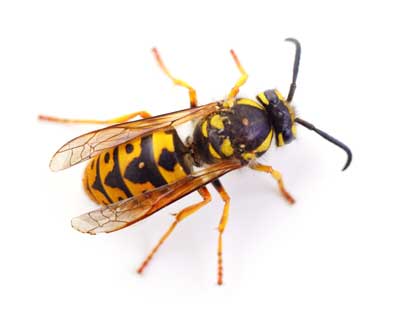
Despite their fascinating abilities, these wasps are often misunderstood. Many people mistake them for aggressive species like yellow wasps or a hornet wasp and feel the same fear. In truth, mud daubers are gentle, solitary wasps that rarely bother humans. In fact, they are allies, quietly controlling spider populations while going about their work.
Understanding how they live and why they build those unique nests can turn fear into curiosity. Unlike social wasps that hover around outdoor gatherings, mud daubers prefer a quiet, purposeful life. They focus on hunting spiders and constructing their mud homes in sheltered corners. This guide explores everything you need to know about mud dauber wasps, their appearance, nesting habits, behaviour, and the important role they play in maintaining balance in your garden and home.
What Are Mud Dauber Wasps?
Mud dauber wasps are part of a group of solitary wasps that live and work alone. Unlike hornets or other social wasps, they don’t rely on a colony. Each female is responsible for every step of the process, building the nest, hunting for food, and ensuring her young survive.
Several species fall under the term mud dauber, but some of the most common include the black and yellow mud dauber, the organ-pipe mud dauber, and the striking blue mud dauber. While each has slight differences in appearance and nesting style, they all use mud as their primary building material.
One of the most fascinating traits of this wasp is its calm nature. Unlike territorial wasps that will fiercely defend their nests, mud daubers rarely sting unless they feel directly threatened. They are much more interested in hunting spiders, gathering food for their larvae, and completing their intricate construction projects. This natural pest control makes them valuable, especially in gardens where spider populations can grow quickly.
Physical Characteristics of Mud Dauber Wasps
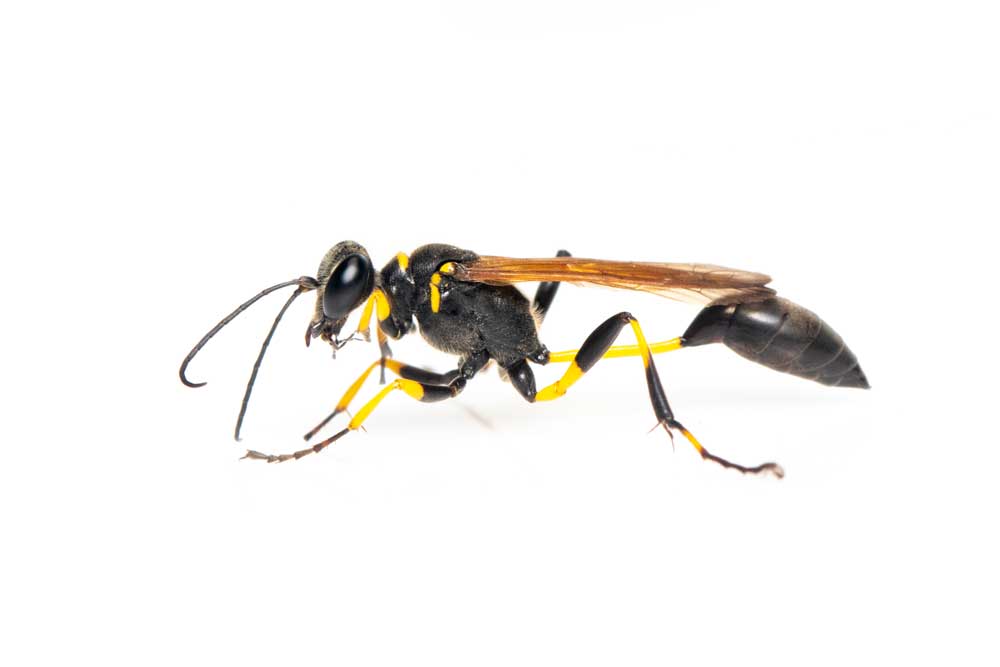
Recognising a mud dauber wasp is simple once you know what to look for. They are slender insects, usually around 12 to 25 millimetres long, with an exceptionally thin “thread-like” waist connecting the thorax and abdomen. This distinctive shape sets them apart from bulkier species like hornets.
Their colours vary depending on the species. The black and yellow mud dauber is easy to identify with its bright yellow legs and markings against a dark body, while the blue mud dauber has a stunning metallic blue sheen that glimmers in the sunlight. Their wings are often tinted with a smoky or amber hue, folding neatly along their bodies when they are not in flight.
Mud daubers are also equipped with strong jaws designed for handling mud, allowing them to collect, shape, and build with remarkable precision. Their long legs are adapted for carrying small balls of mud, making them perfectly suited for their role as nature’s builders. Compared to more aggressive wasps, they have a more delicate and streamlined appearance, reflecting their solitary way of life.
Nesting Habits and Behaviour
The nest of a mud dauber wasp is one of nature’s most fascinating examples of insect engineering. The process begins when a female collects mud from damp areas, rolling it into small balls that she carries back to her chosen site. She carefully applies the mud layer by layer, shaping cylindrical tubes that will become safe chambers for her offspring.
Each tube, which is about 25 millimetres long and only a few millimetres wide, can take 20 to 30 trips to complete. The wasp works tirelessly, smoothing and reinforcing the walls to ensure they are strong enough to withstand weather conditions for years. She chooses sheltered locations for her nests, such as under eaves, inside sheds, or on porch ceilings, spots that provide both protection from the elements and easy access for hunting.
Once the nest is built, the mud dauber shifts focus to hunting spiders. She uses a precise sting to paralyse the spider without killing it, ensuring fresh food for her larvae. Several spiders are packed into each tube before she lays an egg and seals the chamber with a final layer of mud. A single nest can hold multiple cells, each one prepared with the same care and attention.
Do They Pose Any Risk to Humans?
Mud dauber wasps are among the least aggressive wasp species. They do not defend their nests the way social wasps do and will rarely sting unless they are provoked or handled. Even when they do sting, the pain is mild compared to other wasps, often causing only minor discomfort.
Because they are solitary, there is no risk of multiple stings from a swarm. This makes them far less of a threat than hornets or yellow jackets. For most people, the best approach is simply to leave them alone and allow them to continue their work. The benefits they bring, particularly their ability to control spider populations, far outweigh any potential risk.
Children and pets are generally safe around mud daubers, though it is always wise to teach them not to disturb any insect nests. Once you understand how gentle these wasps are, it becomes easy to see them as helpful neighbours rather than pests.
Interesting Facts About Mud Dauber Wasps
Mud daubers have a fascinating way of hunting. They don’t just capture any spider they find, but often focus on specific types, including black widows and other common household spiders. Their sting is a remarkable biological tool, precisely targeting the spider’s nervous system to cause paralysis while keeping it alive as a fresh food source.
Their nests can survive for years, even after the wasps themselves are gone. Some species, like the organ-pipe mud dauber, build rows of perfectly formed tubes that resemble musical pipes. Others, like the blue mud dauber, will repurpose old nests instead of building new ones, showcasing their adaptability and resourcefulness.
Researchers have also noted that mud daubers are skilled navigators. They can remember the locations of their nests, mud sources, and hunting grounds, travelling back and forth with surprising accuracy. It’s a level of coordination that demonstrates just how intelligent and efficient these tiny insects can be.
Their Place in the Ecosystem
The mud dauber wasp plays an essential role in maintaining ecological balance. By hunting spiders, they naturally reduce populations that might otherwise become overwhelming. This form of pest control works without any chemicals or human intervention, making it a quiet but effective ally in gardens and around homes.
Their nest-building also has subtle environmental benefits. By gathering mud from various spots, they help aerate the soil and promote healthier plant growth. While not primary pollinators, they do feed on nectar, which means they can contribute to pollination as they travel from flower to flower.
The presence of mud daubers often indicates a healthy ecosystem. They need a steady supply of spiders, access to mud, and safe nesting spots, factors that usually point to a balanced and thriving environment.
Coexisting with Mud Dauber Wasps
Living alongside mud dauber wasps is not just safe but beneficial. If you find a nest on your property, consider leaving it until the season ends, as it will be abandoned once the larvae mature. Empty nests can be removed easily without harming the wasps.
You can make your garden more inviting for them by maintaining a moist patch of soil for mud collection and avoiding the use of harsh pesticides. Encouraging natural biodiversity, such as flowering plants and shrubs, also supports the insects they rely on for food.
Education is key to peaceful coexistence. Once you understand that these wasps are not aggressive, it becomes easier to appreciate their role and even enjoy observing their tireless work.
Why Mud Dauber Wasps Deserve Our Respect
The mud dauber wasp is a perfect example of how even the smallest creatures can have a big impact. Their skill as builders, their precision in hunting, and their contribution to controlling pests all make them an important part of the natural world.
Instead of seeing them as a threat, we can choose to admire their craftsmanship and quiet determination. The next time you spot one of their distinctive mud tube nests, take a closer look. You might just find yourself appreciating the little architect at work, keeping your garden balanced and free of spiders.
Need Help with Mud Dauber Wasp Nest Removal?
Mud dauber wasps are typically harmless and even beneficial, but their nests can sometimes show up in places that aren’t ideal, especially near doors, windows, or busy areas around the home. If a nest is becoming a concern, our wasp nest removal service offers a safe, effective solution.
For expert support and guaranteed results, call 086 233 7727 or email us at michael@waspnestremoval.ie. We proudly serve Dublin, Meath, Kildare, and Co. Louth, ensuring your home stays protected and pest-free.
Send us a Message
We'll get right back to you!