Paper Wasps Unveiled: Nature's Architects and Their Fascinating World
We offer expert wasp nest removal in Dublin, Meath, Kildare and Louth. Whether the nest is in your attic, garden, vent, or wall cavity, we’ll take care of it quickly and safely.

Since 2008, we’ve been safely removing wasp nests from attics, sheds, vents, rooflines and garden areas across Ireland.
Call us on 086 233 7727 to book a professional removal today
Wasp Nests Removed
We have removed 1000s of wasp nests across Ireland since 2008!




Most people see a wasp and immediately think “danger.” Yet, the striped insect hovering near your garden shed could actually be one of nature’s most skilled architects. Paper wasps are remarkable creatures that build intricate nests from plant fibres and saliva, creating lightweight structures that are both strong and functional. These wasps deserve recognition beyond their reputation as backyard nuisances.
This species is not just a builder; it plays an important role in the ecosystem. As skilled pollinators and natural pest controllers, they help maintain a healthy balance in gardens and wild habitats. Understanding their lifecycle, behaviour, and ecological role can lead to a deeper appreciation of their contribution to the natural world and may even inspire sustainable design ideas.
This guide delves into the fascinating world of paper wasps. You’ll learn about their unique nest-building techniques, complex social structures, environmental benefits, and tips on coexisting peacefully with them.
What Are Paper Wasps?
Paper wasps belong to the Vespidae family, a large group of social wasps found worldwide. They thrive in gardens, woodlands, and rural areas across Europe, North America, and other temperate regions. While many people confuse them with hornets or yellowjackets, these insects are generally calmer and less aggressive unless their nests are threatened.
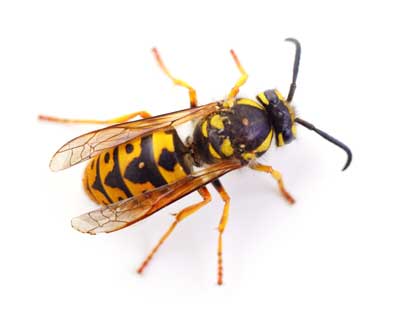
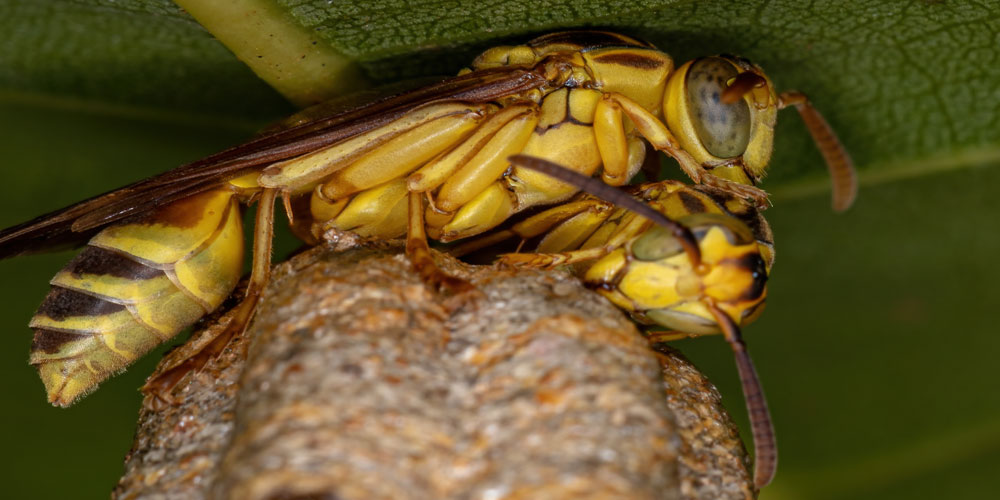
They are easy to identify. These wasps have slender, elongated bodies with a narrow waist, long dangling legs, and brown or black colouring marked with yellow stripes. Their wingspan is usually between 15–25 mm, making them larger than most common wasp species but smaller than hornets.
What sets them apart is their nest. Their umbrella-shaped homes often hang from eaves, tree branches, or garden furniture. These structures are not only practical but also display an impressive level of craftsmanship that rivals some human engineering designs.
The Remarkable Architecture of Paper Wasp Nests
Their nests are among the most fascinating examples of natural architecture. Using a simple yet ingenious technique, workers gather fibres from dead wood, bark, or stems. They chew the material, mixing it with their saliva to create a pulp that resembles paper. This pulp is then moulded into thin layers, forming the base structure of the nest.
The interior is built from hexagonal cells. This shape is no accident; it’s one of the strongest and most efficient structures in nature. Hexagons allow for maximum space with minimal materials, which is why engineers and architects often look to wasp nests for inspiration when designing lightweight and durable structures.
The nest begins with a single queen in spring. She creates a few starter cells, lays eggs, and raises the first generation of workers. These workers take over the building process, expanding the nest in layers as the colony grows. By the end of summer, a well-developed nest may hold dozens of wasps, all living harmoniously in a surprisingly lightweight but durable structure.
One impressive feature of these nests is their resilience. Even though they’re made from paper-like material, they can withstand rain, wind, and fluctuating temperatures. Scientists have studied these structures to explore ideas for sustainable, biodegradable materials that could benefit industries such as packaging and construction.
Lifecycle and Behaviour of Paper Wasps
The lifecycle of paper wasps begins each spring. A fertilised queen, having survived winter hibernation, finds a sheltered location and starts building the nest. She lays eggs in the first few cells, which hatch into larvae. These larvae go through several developmental stages before maturing into adult worker wasps.
The first generation of workers is exclusively female. They assume responsibility for expanding the nest, feeding larvae, and foraging for food. This allows the queen to focus on producing more eggs. A clear social hierarchy forms within the colony, with each wasp performing a specific role: builders, hunters, defenders, and caretakers.
These insects are more intelligent than many assume. Studies show they can recognise individual faces, both of their fellow wasps and even humans. This helps them distinguish between threats and familiar figures, which may explain why they often coexist peacefully with people who don’t disturb their nests.
Despite their ability to sting, this species is generally non-aggressive. They are unlikely to attack unless they feel their nest is under threat. Most stings occur when someone accidentally disturbs a nest or swats at a wasp.
Environmental Benefits of Paper Wasps
Paper wasps play a vital role in maintaining healthy ecosystems. While they aren’t as famous as bees for pollination, they do contribute by transferring pollen as they feed on nectar. This supports plant reproduction and helps maintain biodiversity in gardens and wild habitats.
One of their most valuable roles is pest control. These wasps hunt caterpillars, beetle larvae, aphids, and other insects that can damage plants. A single colony can eliminate thousands of pests during the growing season. Their hunting technique involves paralysing prey with a sting, carrying it back to the nest, and feeding it to larvae. This natural pest management reduces the need for chemical pesticides, making them a gardener’s ally.
Unfortunately, many people assume all wasps are aggressive. In reality, these insects are far less aggressive than yellowjackets or hornets. They usually ignore humans unless provoked, making them beneficial companions in gardens and green spaces.
How to Coexist with Paper Wasps Harmoniously
Living with these wasps is easier than most people think. The key is to understand their behaviour and give them space. If a nest is located away from high-traffic areas, there’s usually no need to remove it. The colony will naturally abandon the nest at the end of the season.
However, if a nest is near doorways, windows, or play areas, it’s best to call a professional pest control expert or beekeeper for safe relocation. Attempting to remove a nest yourself can trigger defensive behaviour.
Here are some tips for avoiding conflicts:
-
- Wear light-coloured clothing when gardening or working near wasps. Dark or patterned clothes can make them feel threatened.
- Avoid sudden movements and never swat at them.
- Limit strong perfumes or scented products outdoors, as these can attract wasps.
- If one hovers near you, stay calm and slowly move away instead of flailing.
Understanding their warning signals can also help. They may hover or make tapping movements with their antennae if they feel uneasy. Recognising these behaviours and respecting their space usually prevents stings.
Fun Facts About Paper Wasps
These insects are full of surprises. Here are some interesting facts about them:
-
- Facial Recognition: They can recognise individual wasps and even remember human faces.
- Biomimicry Inspiration: Their nest designs inspire engineers looking for lightweight, strong, and eco-friendly building materials.
- Colour Variations: Depending on the plant fibres they use, their nests can vary in colour and texture.
- Efficient Hunters: Workers can identify the nutritional needs of larvae and adjust their hunting habits to provide the right food.
- Different Lifespans: Workers live only a few weeks, but queens can survive up to a year, emerging in spring to start a new colony.
Embracing Nature’s Master Builders
Paper wasps are far more than backyard pests. They are intelligent builders, effective pest controllers, and essential parts of the natural environment. Their intricate nests showcase nature’s ability to create functional and beautiful designs using minimal resources.
By observing these insects with curiosity rather than fear, we gain valuable insights into how nature solves complex problems with simple, sustainable solutions. Whether it’s their efficient use of materials or their role in controlling garden pests, they prove that every creature has a part to play in maintaining balance in the ecosystem.
The next time you spot a nest, consider watching from a safe distance. Notice how the workers tirelessly build and maintain their home, supporting the growth of the colony while contributing to your garden’s health.
Send us a Message
We'll get right back to you!