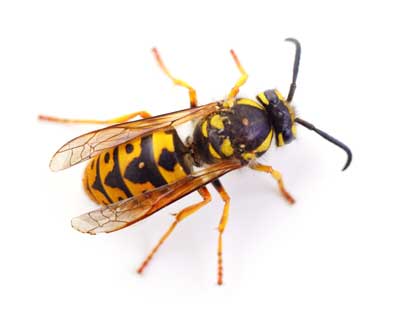
The wasp breeding season is when colonies grow rapidly, nests expand, and the risk of stings increases, making it one of the most active and potentially dangerous times of year for wasp activity in Ireland. Understanding the timing and stages of the wasp breeding season can help you stay safe, protect your home, and take action before infestations become a problem.

Understanding the Wasp Life Cycle and Breeding Season
Wasps aren’t just summer visitors or occasional nuisances; their breeding season is an important part of their life cycle. Ireland has several wasp species, including social wasps, that help maintain the ecological balance. Social wasps are one of the most complicated animal societies, where worker wasps help raise the queen’s offspring, gather food, and defend the nest. Whether you’re into nature, gardening, or just want to keep wasps at bay during the warm weather, it’s good to know when and how wasps breed.
The Wasp Breeding Season: From Spring Emergence to Autumn Decline
The wasp life cycle is a complex and fascinating process that involves numerous stages, from the founding of a new nest to the production of fertile wasps. At the heart of this process is the queen wasp, who lays eggs and starts a new colony. The queen wasp, the largest member of the colony, can live up to a year, while worker wasps, which are sterile female wasps, live only a few weeks.
The cycle starts in early spring, when the queen appears from hibernation and looks for a convenient location to build a new nest. Once she finds the perfect place, she starts to build the nest using chewed wood fibres mixed with her saliva. This is the initial structure of the nest where she lays her first set of eggs.
These eggs develop into larvae that the queen provides with protein-rich food. As the larvae grow, they eventually pupate and emerge as adult worker wasps. These worker wasps take over the tasks of foraging for food and developing the nest, allowing the queen to focus solely on laying eggs. By late summer, the queen focuses on producing fertile males and new queens to ensure the continuation of the colony.
Understanding the wasp life cycle is key to effective wasp control and management. By knowing the different stages and roles within the colony, you can better anticipate and address wasp-related issues.
Nest Expansion, Reproduction, and Risk Factors
Wasp breeding season in Ireland runs from late spring to summer, with peak activity from June to August. During this time, the queen wasps wake up from winter hibernation and start new colonies. Once the weather warms up, the worker wasps emerge, and the colony grows quickly as breeding intensifies, often leading to the formation of a wasp nest in garden spaces or near entry points to homes. By late summer, the reproductive queen stops producing workers and starts producing male wasps (drones) and new queens. This allows the species to reproduce and continue. In autumn, the drones and new queens leave the nest to mate. Wasps disappear at the end of summer, as the weather cools and the worker wasps die off.
When the temperature drops in autumn, the new queens find a place to hibernate, and the breeding season is over. The other colony members, workers and drones, die off as winter approaches.
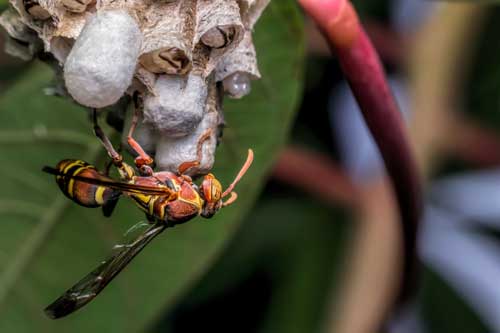
Wasp breeding is a social process with the queen in charge. Here’s how it works:
-
- Queen Emerges
After hibernating through winter, the fertilised queen emerges in early spring. She looks for a good spot to build a nest, often in sheltered areas like attics, sheds, or under the eaves of houses. - Nest Building and Egg Laying
The queen builds the first part of the nest using chewed wood fibres. Once she has the basic structure, she lays her first eggs, which will become worker wasps. - Worker Development
The eggs hatch into larvae that the queen feeds with protein-rich food like insects. After maturing, the larvae pupate and emerge as worker wasps. These workers take over nest building and foraging for food, allowing the queen to focus on laying eggs. The developing larvae play a crucial role in the social structure of the colony. Worker wasps feed the developing larvae through a process called trophallaxis, which strengthens social bonds within the colony. - Drones and New Queens
By late summer, the queen starts producing males (drones) and new virgin queens. These new queens mate during flight, then prepare to hibernate and start their colonies next year. - Mating and the Cycle Continues
The drone’s main job is to mate with new queens, after which they die. The fertilised queens hibernate, and the cycle starts again the following spring.
- Queen Emerges
Nest Growth and Human Impact
Wasp nest formation is a key part of the wasp life cycle. The process starts when a queen wasp, who has survived the winter, emerges from hibernation and begins to build a new nest. Using her saliva and wood fibres, the queen builds the nest, which is made up of a series of hexagonal cells. These cells form the initial structure of the nest where the queen lays her first eggs.
After the eggs develop into larvae, the queen feeds them with sugary substances and other insects. As the larvae grow, they spin a silken cap over their cell and pupate, eventually emerging as adult worker wasps. Worker wasps take over the job of finding food and building the nest. This allows the queen to concentrate on laying more eggs.
An average wasp nest produces between 1,000 and 2,000 queens per season, although some nests can produce many more. Wasp nests can grow rapidly, with some nests containing up to 5,000 wasps at the peak of summer. German and common wasps are two of the most common species that build nests, and their nests can be found in trees, bushes, and buildings. If left undisturbed, nests can also develop in hard-to-reach areas like roof voids or loft spaces, resulting in a potential wasp nest in attic areas.
Understanding wasp nest formation can help you identify and manage nests early, and prevent larger infestations and a safer environment. For those seeking natural prevention alternatives, early-stage colonies may also respond to certain natural wasp removal techniques before chemical solutions are needed.
Why the Wasp Breeding Season Matters
The wasp breeding season is not just a biological process but a period with real-world impacts. From spring emergence to autumn decline, wasps serve vital ecological roles, including pest control and limited pollination. However, their tendency to build nests in or near human spaces raises safety concerns, particularly during late summer when food becomes scarce and aggression increases. By understanding when and how wasps breed, you can take early action to deter nest formation to safely remove existing colonies while still recognising their ecological importance. Early awareness during the wasp breeding season helps reduce the chance of nests forming in hidden areas like soffits, cavities, or wall gaps, often linked to a developing wasp nest in the wall.
contact form
Call for Safe and Professional Wasp Nest Removal
Worried about rising wasp activity during the warmer months? The wasp breeding season is when infestations are most likely to take hold. Acting early can prevent nests from forming near your home, garden, or business.
For safe, fast, and discreet wasp nest removal, call 087 254 2839 or book online today. We cover Dublin, Meath, Kildare, and Louth with guaranteed next-day or same-day service.