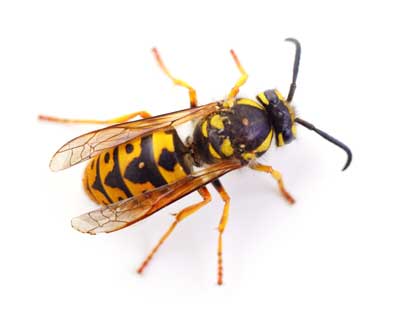
Finding a wasp nest in tree branches can be an unsettling experience, especially when the nest is close to your home, garden, or play area. Wasps can be territorial and aggressive, particularly in late summer when their behaviour becomes more erratic. Understanding the risks, knowing how to remove the nest safely, and preventing future infestations are all important steps in protecting yourself, your family, and your outdoor space.
This article offers clear guidance for Irish homeowners and tenants on identifying a wasp nest in tree areas, understanding why they form, when removal is appropriate, and what steps you should take to keep your garden wasp-free throughout the season.
Identifying a Wasp Nest in Tree: What to Look For
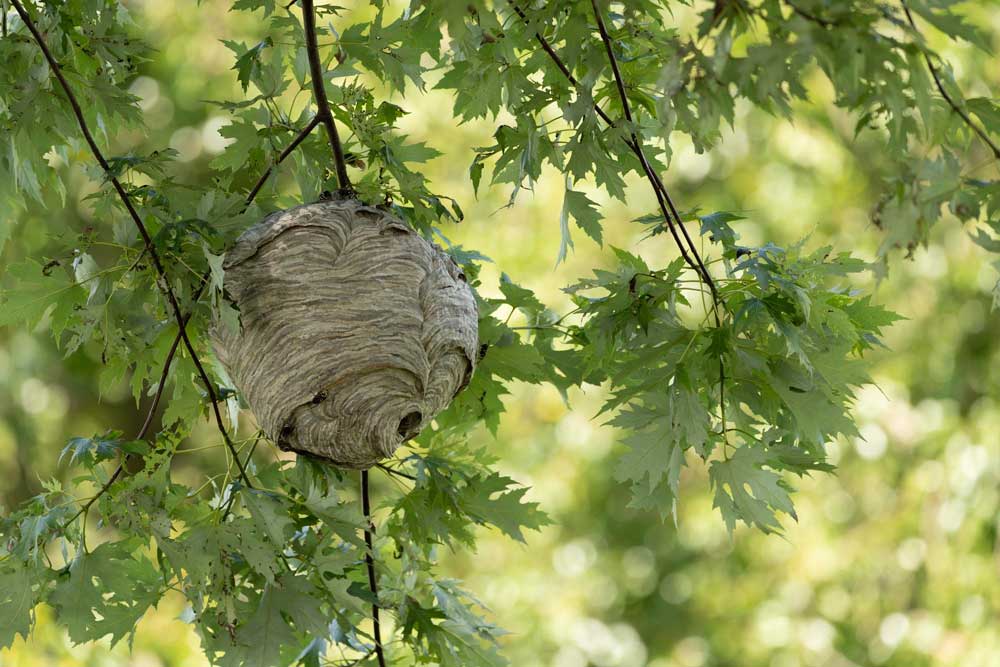
The first sign of a wasp nest in tree cover is usually an increase in wasp activity. If you notice wasps repeatedly flying to and from a specific point in your tree, especially the trunk, fork, or inner branches, there’s a good chance a nest is nearby. While some nests are easily visible, others are tucked inside natural hollows or obscured by leaves, and in some cases, may even resemble a wasp nest in garden if close to ground vegetation.
Wasp nests are made from chewed wood fibres mixed with saliva, giving them a distinctive papery appearance. Common visual signs include:
-
- A grey or brown, ball-shaped nest, often resembling a paper lantern or small football.
- Nests are located in tree forks, under limbs, or within cavities in the trunk.
- Regular traffic of wasps entering and exiting one location.
- Buzzing noises or visible hexagonal combs if the outer layer is damaged.
Different species build different structures:
-
- Paper wasps create open, umbrella-shaped nests with visible combs.
- Hornets and yellowjackets build enclosed, football-sized nests with smooth outer walls.
- Some nests grow as large as basketballs by late summer, housing thousands of wasps.
If you suspect a wasp nest in tree branches, do not attempt to get close or poke the structure. Wasps will defend their nest if threatened. Observe from a safe distance and note the size, shape, and activity level. Use binoculars if needed.
Safe Methods to Remove a Wasp Nest in Tree
Dealing with a wasp nest built on tree limbs should never be done impulsively. Without the right safety precautions, disturbing the nest can lead to multiple stings. We strongly advise assessing the risk level first and only proceeding if the nest is small, relatively inactive, and easily accessible.
Safe DIY Removal Tips
The safest time to remove a wasp nest is at dawn or dusk, when temperatures are cooler and most wasps are inside the nest.
Protective steps before you start:
-
- Wear thick clothing: long sleeves, trousers, gloves, and ideally a beekeeper-style mesh hood.
- Inform others: Keep children and pets indoors, and let household members know your plan.
- Prepare your method: Decide on physical removal, natural remedies, or chemical spray.
Removal methods:
-
- Soap and water solution: A mixture of dishwashing liquid and water in a spray bottle can suffocate smaller nests. Spray directly at the entrance until saturated. This method is commonly used in natural wasp removal where chemical-free solutions are preferred.
- Boiling water: Pouring it directly into exposed nests can kill wasps, but extreme caution is needed to avoid burns.
- Aerosol wasp spray: These sprays work best from a distance (2–3 metres). Aim for the entrance hole and repeat the application after 24–48 hours.
- Bin liner method: For smaller, accessible nests, place a heavy-duty bag over the nest, seal it at the top, and detach it from the branch. Then freeze or submerge it overnight.
Do not attempt DIY removal if:
-
- The nest is larger than a fist.
- Located high up in the tree.
- Wasps are actively swarming or showing signs of aggression.
- You or someone nearby is allergic to stings.
For anything beyond a minor nest, professional removal is the safest and most effective option.
How to Prevent Another Wasp Nest in Tree
Preventing wasps from rebuilding is just as important as removing the existing nest. After a queen abandons or dies, other wasps may return to the same location, especially if it provides good shelter or food sources.
Steps to Prevent Re-Nesting
- Clear food sources
Wasps are attracted to protein and sugar. Keep bins closed, clean up pet food, and avoid leaving sweet drinks outside. - Prune overgrown trees
Dense foliage and overlapping branches give wasps more cover. Trim back trees to reduce nesting appeal. - Use repellent plants
Citronella, mint, eucalyptus, and marigolds are known to repel wasps naturally. - Seal up hollows and cavities
If a tree has holes or bark damage, use breathable filler to discourage nesting inside. - Install wasp decoys or traps
Hanging decoy nests can trick queens into avoiding the area. Bait traps with sugar water to catch scouting wasps early in the season. - Regular inspections
During spring and early summer, check tree branches regularly. Catching a new nest early means it can be removed before it becomes a hazard.
When to Call a Professional for Wasp Nest in Tree Removal
While small nests can sometimes be handled safely at home, there are situations where professional pest control is strongly recommended.
Contact a pest control expert if:
-
- The nest is high up or difficult to reach
- The wasps are aggressive, swarming, or attacking unprovoked
- There are multiple nests on the property
- You’re unsure whether it’s a wasp nest or a bee/bumblebee colony
- A member of your household has a wasp sting allergy
Professionals use specialised tools, protective gear, and regulated insecticides. Many also carry out aftercare, such as inspecting for additional nests and applying deterrents to stop regrowth. In cases where you’re also dealing with a ground wasp nest, professional support becomes even more important due to the hidden nature of underground colonies. A licensed technician can safely assess the species, nest size, and threat level before deciding on a treatment plan.
In Ireland, wasp activity typically peaks between May and September, with nests becoming most aggressive in late summer as food sources shift. If you’re dealing with a nest during this time, avoid delay it may grow significantly in just a few weeks.
Summary
A wasp nest in tree branches poses more than just an inconvenience; it’s a potential threat to your safety, your family, and the health of your garden. Early identification, informed action, and proactive prevention are your best tools to manage the problem.
Wasps are a natural part of our ecosystem and can be beneficial in small numbers, helping to control garden pests and even assisting with pollination. But when they choose to nest in a high-traffic area or close to your home, removal becomes necessary.
If you’re unsure how to proceed or are dealing with a difficult location, contact a licensed pest control expert. You can also read our general guide on how to remove a wasp nest to better understand safe removal practices and when to seek help. With the right approach, you can safely reclaim your outdoor space and keep it free from stings.
contact form
Need Help with a Wasp Nest in Tree? We’re Here to Assist
We offer fast, same-day wasp nest removal across Dublin, Meath, Kildare, and Co. Louth. Our certified pest control technicians bring years of hands-on experience to every job, ensuring treatments are safe, discreet, and effective no lingering wasps, no unnecessary disruption. Whether it’s a wasp nest in tree branches, wasp nest in roof tiles, or sheds, we’re fully equipped to handle it quickly and professionally.
Don’t wait for the problem to escalate. Call us on 087 254 2839 or book online to schedule your service. We’re here to help you reclaim your garden with confidence and peace of mind.